
Research
Abstract:
This document outlines the research approach and methodology, MRG will follow in their undertakings of research.
Introduction:
This document outlines the adopted plan for the Mapulana Renaissance Group (MRG) research unit.
Observations: currently, the South African history, as prescribed in the curriculum across teaching and learning institutions in the country, contains little if anything concerning beneficial histories/heritage of the indigenous majority peoples of this country. Similarly, the authorship about the histories of the indigenous populace is white and foreign to indigenous cultures, thus, biased and lacking in correct recording of the histories of the South African natives.
Furthermore, current debates about “history” becoming a compulsory subject in all public schools put the spotlight on the content thereof. The discussion is on the content of the history subject, which, on the 21 august 2018, led to the department of basic education (RSA) submission to parliament subsequently calling for the overhaul of the current caps system, as it does not put the African story at the center.
Thus, a need for the paradigm shift: to move away from the current eurocentric history expressing the European opinion on Africa and its indigenous peoples. Thus, the Mapulana Renaissance Group sees this as an opportunity to reawaken and recover the diminished historical heritage and safeguard their nationality. Moreover, the classification of the Mapulana nation’s identity is currently erroneously as a sub-group of the Bapedi nation.
Vision
Reawaken and restore diminished Mapulana nation and its heritage; through gathering and interpreting sources of information on the history of the Mapulana nation: united by common descent, culture, and/or language. Researched information aimed at enabling future generations to be aware and to know who they are; their ancestry and places of origin; and their status among nations – locally, and internationally.
Research Objectives:
To gather historical information about the Mapulana nation.
To review and authenticate the information gathered.
To document/publish the information with the aim to instill awareness among the general populace, concerning the Mapulana nationhood.
Approach and Methodology:
The collection of information is 3-pronged.
1. Reliance on research centres – libraries and archives to:
● Collect documented reports of area commissioner who worked
among the Mapulana people (archives).
● Collect documents, among others, from mission societies who did
mission work, among the Mapulana and their neighbouring
indigenous tribes.
● Where feasible, contact and liaise with mission societies, archives
and libraries in Europe to further request repatriation of mission
documents to RSA.
● Liaise with universities in the RSA to hold repatriated material on
behalf of the Mapulana Renaissance Group.
2. Information gathered from primary sources: existing people who
have verifiable relevant knowledge, about the Mapulana history.
3. Subject the information gathered to the following:
● research articles in accredited journals.
● publications in monograms, books etc.
● academic papers at conferences, symposia, seminars etc
Target audience and for the write-ups:
The Mapulana people and all those who will find the group productions interesting and educating, about the Mapulana people.
The department of education in the RSA, who aims to have history as a compulsory subject in school from 2023.
The Department of Arts and Culture (who needs books/writings of this nature), to promote the African Renaissance movement locally and internationally. Encouraging communities to understand why indigenous communities conducted themselves the way they did will lead to an appreciation of the basis for Ubuntu.
The Department of Higher Education, including all institutions of higher learning – private as well as public – will benefit from this write-ups in training future leaders and sensitises them of their responsibility to move the recognition of fellow national groupings, neighbourliness and bolstering the moral regeneration drive forward.
The provincial government of Mpumalanga – will need such write-ups to help them with legislation work; to recognise Mapulana traditions and culture.
Research Principle:
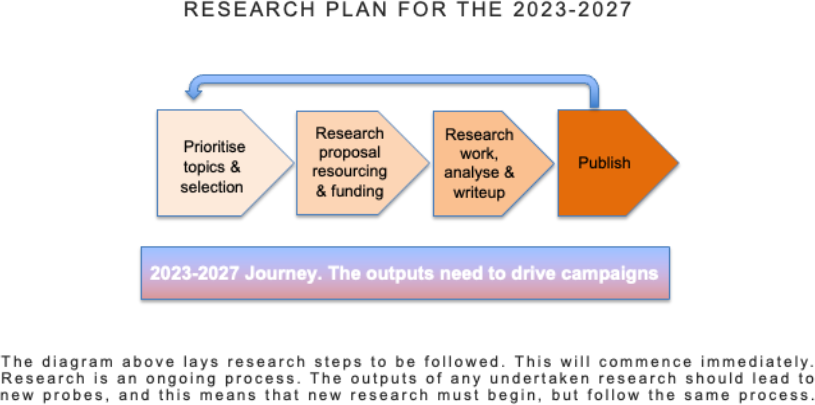
Before any research can be undertaken, it must be preceded by research proposal to the research unit of MRG, with the following, but not limited to, content:
1. Research topic
2. Objectives
3. Research method
4. Technology / tools
5. Data / information handling and protection
6. Data processing and analysis
7. Location
8. Resources
9. Cost
Challenges / Weaknesses
MRG, as a non-profiting organization faces the following challenges:
Finance
Resources (researchers)
Research tools
 using WordPress and